Skip to content

2007

Idea: Pipes + SQL = Structured Web Query Language

Let’s remix 2 original observations:

In Yahoo! Pipes, what used to be a table in the relational database is now: a web page, an RSS feed, etc. The current list of sources includes: Yahoo! Search, Yahoo! Local, Fetch (RSS feeds), Google Base and Flickr. Each source can be searched or queried using either pre-defined or user-defined parameters. For example, there can be a search of all french restaurants in Chicago via Yahoo! Local. The data source and the searches can be mixed together (think emergence), using a reach set of operators. Among them is the iterator (which lets the user loop through the results), a counter and many other functions that facilitate cleaning, manipulating and recombining the information.
Yahoo! Pipes and The Web As Database via PoorButHappy

and this one:

Command line interfaces. Once that was all we had. Then they disappeared, replaced by what we thought was a great advance: GUIs. GUIs were – and still are – valuable, but they fail to scale to the demands of today’s systems. So now command line interfaces are back again, hiding under the name of search. Now you see them, now you don’t. Now you see them again. And they will get better and better with time: mark my words, that is my prediction for the future of interfaces.
jnd.org

Adultery and secure documents

I get an email from CertiPost, a daughter company of the Belgacom/Belgian Post, that bears the title “You had an unwanted visitor last night“. When one clicks on the link, one has to give the name of one’s partner, best friend and favourite sport. The result is a somewhat customized movie about a wife who cheats on her husband, or actually, your wife cheating on you.
tristan-isolde

Who are the voices from The Simpsons?

Did you know that the voices from Homer Simpson, Grampa Abraham Simpson, Barney Gumble, Krusty the Clown, Groundskeeper Willie, Mayor Quimby, Sideshow Mel, Itchy and still half a dozen others are all done by the same man?

You give out your passwords every day

If you’re allergic to acronyms, don’t read on. I’ve reached an all-time TLA/FLA density high in the following article!

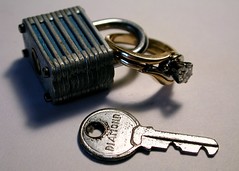
Lock - photo by mfshadowTHE PROBLEM
Who knows the passwords you use for your email accounts? Who knows the password you use for your FTP account? Who knows the password to your blog admin page? There might be more than you thought!

Imagine user John Doe, with username jdoe who has the ‘strong’ password “p@ssw0rd“. Let’s take a look at what conversation happens when his Outlook/Thunderbird email client connects to check for new messages, or when he uploads a new version of his website with Filezilla/Dreamweaver:

This is a typical FTP conversation:

Response:  220 (ID of the FTP server)
Command:    USER jdoe
Response:   331 Password required for jdoe.
Command:    PASS p@ssw0rd
Response:   230 User jdoe logged in.
Command:    ...

This is a typical POP3 (email) scenario

Command:   USER jdoe
Response:   +OK Password required for jdoe
Command:    PASS p@ssw0rd
Response:   +OK jdoe's maildrop has 2 messages (320 octets)

(remark: POP3 does have an APOP command that does not transfer the password in clear-text. It is however typically used for 2nd and following POP3 connections, using a piece of information that was given in the first transaction)

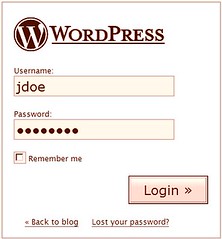
Wordpress loginEven more scary: when you log in to your blog/CMS software (that does not use a Google, Yahoo, MSN or Passport account), how does your password reach the server, you think? Encrypted? Not!

Shades of purple

Have you ever gotten into a discussion with a woman on colors? It seems that, while some people have ‘absolute hearing’ (pinpoint any frequency to the right note), there is also a kind of ‘absolute color perception’, and women seem more often blessed with it. While us men have the habit of calling anything with a red/blue mix ‘purple’, life is actually not that simple. There are many shades of purple: violet, mauve, orchid and half a dozen variations on those.

To upsize a picture, use the B-spline algorithm

If you take a low-res picture, and you want to blow it up to a higher size, there are different algorithms to do the calculation of all those new pixels. I talked about this earlier in “How to upsize an image“. I went a bit further now and took a 100×100 pixels detail of a Roos Van Acker picture by Filip Naudts and enlarged it five times: to 500×500. The tool I use, Irfanview, has 6 algorithms to do resize:
Upsize picture from 100x100 to 500x500

Contrary to what I expected, it was not the Lanczos filter (slowest and ‘best’) that gave the best results, but the B-spline algorithm that’s supposedly a bit worse. With Lanczos you get an rastering effect (check her hair), with B-spline it’s more even.

Paypal-ready shops in Benelux?

Imagine one would have a certain amount of money on one’s Paypal account, and one would like to spend that on hardware or other physical goods. Let’s now limit that to shops active in Belgium, Netherlands and Luxemburg. What are your options? Well, not a lot, it appears.

My own Pagerank inventory

Roos Van AckerWhen I search for Roos Van Acker (in the Google sense of searching), I have 2 sites that show up in the top results: a blog post of mine and the Flickr picture you see at the right. My blog has a Pagerank 6, so that explains why it can score high in searches, but I was sometimes surprised when my Flickr pictures showed up high in Google results; until I noticed that my Flickr stream also had a Pagerank 5. So maybe I had more PR firepower that I suspected. I decided to make an inventory of all sites under my control and see how high their PR is: my Pagerank inventory.
(for more info on Pagerank, check google.com and wikipedia. In short: Google gives each page a ‘weight’ or importance indicator called Pagerank. Pagerank 4 (PR4 in short) is OK, PR7 is kinda hard to get (right, Bart?), PR9 is only for sites like yahoo.com and ebay.com, and PR10 is the absolute maximum (the only site I know with a PR10 is google.com).

.eu domain speculation

When the .eu domains became available to the general public, I decided I did not want forret.eu. That means that the domain was available to be grabbed by someone else, and indeed it has been. I received the following email today:
.EU domains businessmodel
This has all the professional charm of the mafia offering “protection”. The guy hides behind the Gmail of Luxembourg, kmail.lu . A DNS search shows me that KJ stands for Kurt Janusch from G-1 Ltd, 175-177 Newland Avenue, HU5 2EP, Hull UK. His name also shows up in a Eurid dispute (Eurid is the registrar that manages the .eu domains), but with an address in Germany. In another dispute with Altova, he is considered to have registered a domain name “without rights or legitimate interest in the name and in bad faith”.