Idea: Double Vision for 3D cinema
(I had this idea in June 2011 and wrote this post in Oct 2011, but I decided to wait with publishing until my lovely colleague Sylvia could get the scoop and use it for a marketing action).
Do you often find yourself in a situation where you are using some kind of word play in a written (chat or text message) conversation, but feel that you need to make this second level of comprehension clear? This is why emoticons exist: pictorial representations of a facial expression using punctuation marks and letters, written to express a person’s mood. Emoticons were already used in the 18th century and adopted with mucho gusto in electronic communication since 1982. These days, if you don’t know that a “:-)” means that the writer is happy, you’re missing a lot of the meaning of SMS or emails.
It doesn’t stop there, there is also the :-p tongue-sticking-out, the %-) I’m-so-drunk and even *<|:-) Santa Claus. But there is one often-used ironical level that I find is not well covered by the ;-) I’m-only-joking emoticon, and that is the dangerous stylistical weapon called innuendo: an indirect remark about somebody or something, usually suggesting something bad, mean or rude. We need an emoticon that says if-you-know-what-I-mean-wink-wink-nudge-nudge in 3 characters. I hereby propose the …

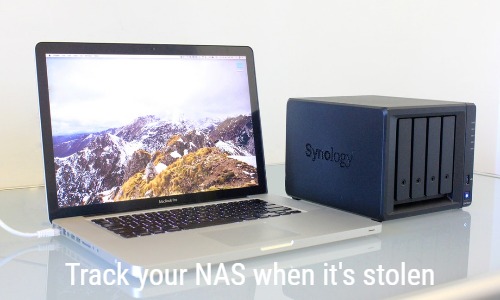
When a friend of mine recently got his MacBook stolen, I quickly verified if I had installed Prey Project on each laptop/desktop PC I have. For those who do not know Prey:

Prey lets you keep track of your phone or laptop at all times, and will help you find it if it ever gets lost or stolen. It’s lightweight, open source software, and free for anyone to use. And it just works.
Yes, I had Prey running on each PC. And then I looked at my Synology NAS (DS410, 4 disks, 8TB raw storage). It could be stolen too. And it’s basically a Linux box. And Prey is available for Linux …
Yesterday evening I was watching “How to replace yourself with very small shell script” by Hilary Mason.
I remember that before I started photography on a serious level, I had some understanding of shutter speed, but none of aperture and focal length. Even when I read what they meant, I still couldn´t ‘picture’ it, had no feeling for the numbers. Let´s leave ‘aperture’ for another time and just concentrate for now on the concept of focal length.

In one corner of my apartment: my fixed telephone line. In another my printer/scanner/fax device. Challenge: run a wire from one to the other, every time you rearrange the furniture.
I was using my iPhone to read my Twitter feed (Twitterrific) and Facebook and when comparing the two, I liked one thing about Facebook that Twitter/Twitterific does not have: when some one posts a URL, you get a preview icon and a short text. This way you can have a rough idea of what the link is about, and whether or not you’re interested to click it. In Twitter it is even worse, since the service uses URL shorteners (bitly, …) so that you don’t even have the original URL to guess what the link is about, like e.g. youtube.com/watch?… => it’s a video!
I spent last weekend at the Brussels Tango Festival, mostly taking pictures of people dancing. Because of the lack of light that is typical for tango events, I had bought a Canon 50mm f/1.8 lens online one week before. First at Pixmania, but because they couldn’t deliver fast enough (product not in stock), I cancelled and ordered at Foto Konijnenberg. I expected the package to be delivered in a couple of days. When I didn’t see any sign of delivery and the track&trace URL didn’t work, I contacted Foto Konijnenberg (very friendly and correct customer support, by the way) to ask what was happening. Apparently the transport company had been at my door twice, did however not leave any message, took the package back and at that moment no one could tell me where the package was. We’re now 2 weeks after purchase and still at the same stage: my lens is somewhere in the purgatory between vendor and buyer but the transport company (TNT/DPD) has no clue where.
Let’s remix 2 original observations:
In Yahoo! Pipes, what used to be a table in the relational database is now: a web page, an RSS feed, etc. The current list of sources includes: Yahoo! Search, Yahoo! Local, Fetch (RSS feeds), Google Base and Flickr. Each source can be searched or queried using either pre-defined or user-defined parameters. For example, there can be a search of all french restaurants in Chicago via Yahoo! Local. The data source and the searches can be mixed together (think emergence), using a reach set of operators. Among them is the iterator (which lets the user loop through the results), a counter and many other functions that facilitate cleaning, manipulating and recombining the information.
Yahoo! Pipes and The Web As Database via PoorButHappy
and this one:
Command line interfaces. Once that was all we had. Then they disappeared, replaced by what we thought was a great advance: GUIs. GUIs were – and still are – valuable, but they fail to scale to the demands of today’s systems. So now command line interfaces are back again, hiding under the name of search. Now you see them, now you don’t. Now you see them again. And they will get better and better with time: mark my words, that is my prediction for the future of interfaces.
jnd.org