photography
Best way to upscale low resolution photos
I’ve been doing some remote shoots recently, as the photographer obviously, and I’ve mainly used FaceTime ‘Live photos’ for captures. The result of such a shoot is a series of .HEIC files (it’s an Apple thing). Each file is a combination of a low-res 3-second movie with a mid-res image file. The image file, which is the one that interests me, is a 716×1280 pixels heavily compressed one. This is not a lot of pixels to start with in Lightroom/Photoshop. I found that it is possible to upscale such an image to 400% (2864×5120), and use this new big image to comfortably do the post-processing. Let me show you the best way to upscale low resolution photos to high resolution!
Ten tips to take better low-light photos (dance/event/concert)
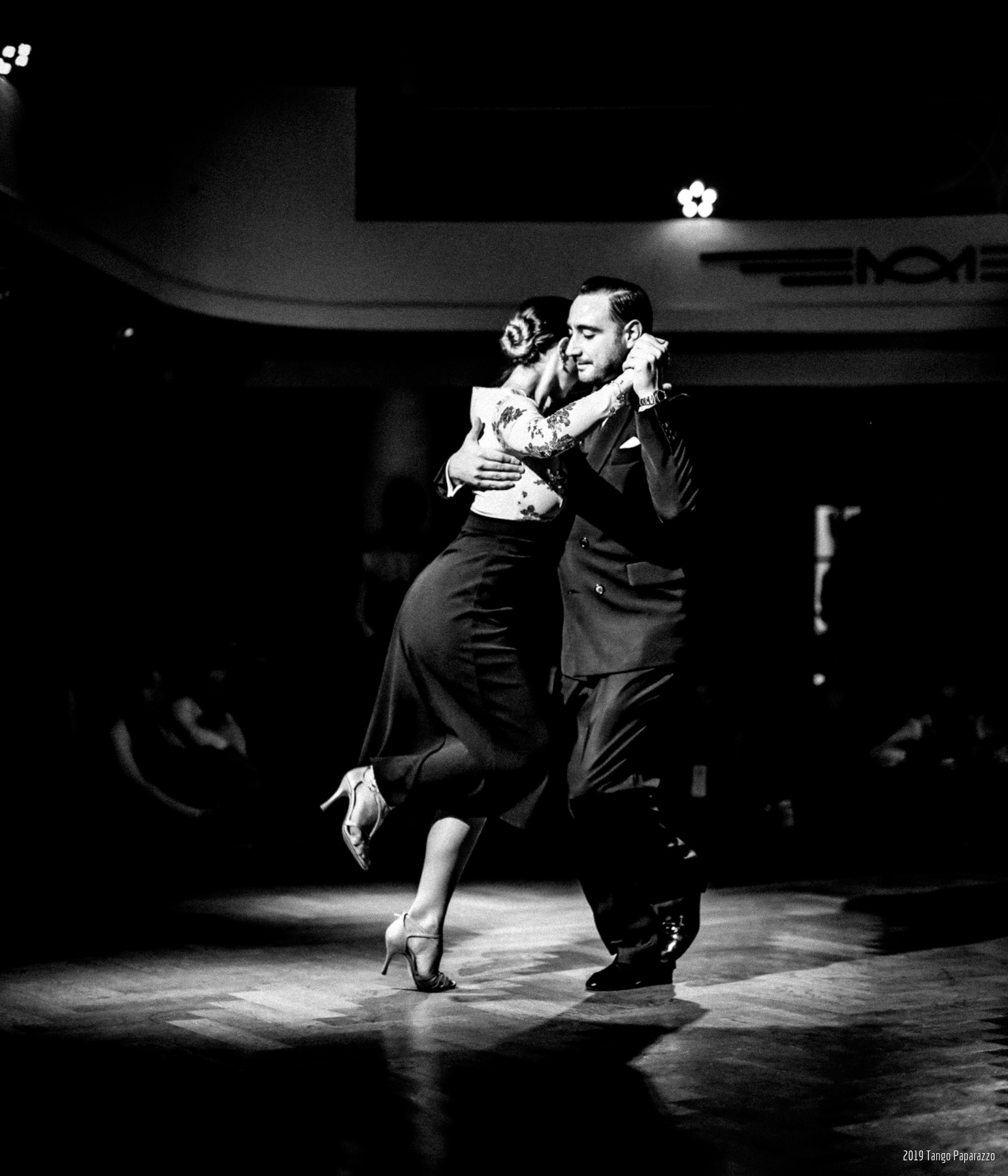
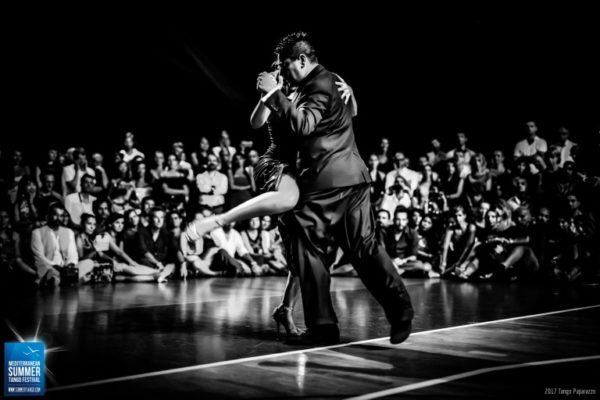
One of my most popular posts is Five tips for taking tango pictures in low light. That information is now more than 10 years old. Technology has evolved a lot since then, as have my photography skills. That’s why there is now the update: Ten tips to take better low-light photos without flash! These are equally valid for tango photography, as well as event, dance and concert photography.
 2018 www.tangopaparazzo.com – www.facebook.com/tangopaparazzo/
Shooting portraits of strangers
This was quite a discovery: Danny Santos has been shooting portraits of complete strangers on Orchard Road, Singapore. The story was featured on JPG Magazine with some beautiful examples and that post pointed to his Facebook album, which pointed to his blog post about it. This phrase he wrote made me think: “Suddenly, strangers were no longer unwitting victims subjects, they were now willing participants … and that gave different life to the photograph, and a new awareness and dimension to my idea of shooting in the streets.” Touches a weak point of mine: asking strangers for permission to photograph them.
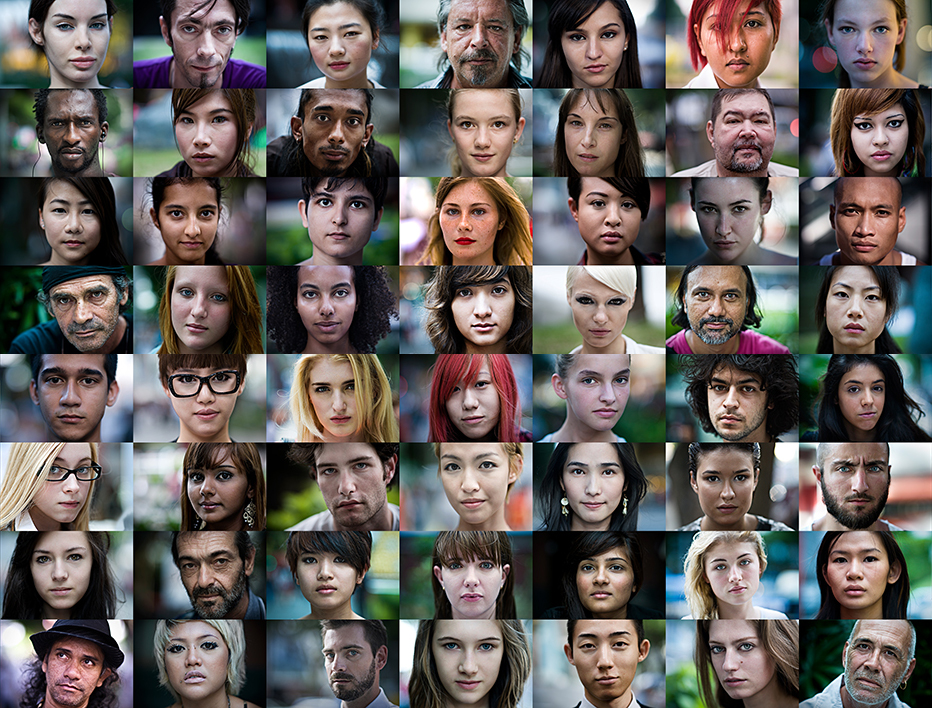
What I like a lot about the photographs is their shallow depth-of-field. He talks about his material: a Nikon D300 with a 85mm f/1.4 lens. That’s a $999 lens, so one can expect some good results.
Let’s see what that looks like in my toolstud.io depth-of-field calculator: there is one picture on his blog that shows him taking a picture of someone at +- 2m away, so let’s use that as distance. If we fill in the right values (1.5 crop factor for a Nikon D300, f/1.4 aperture, 85mm focal length, 2m distance, 3:2 aspect ratio) we get this:
| Depth of field calculation | |
|---|---|
| 0.019 mm | Circle of confusion |
| 1.99 m | Near limit (anything closer will be too blurred) |
| 2.01 m | Far limit (anything further will be too blurred) |
| 2.8 cm | Total (1.4% of the subject distance) |

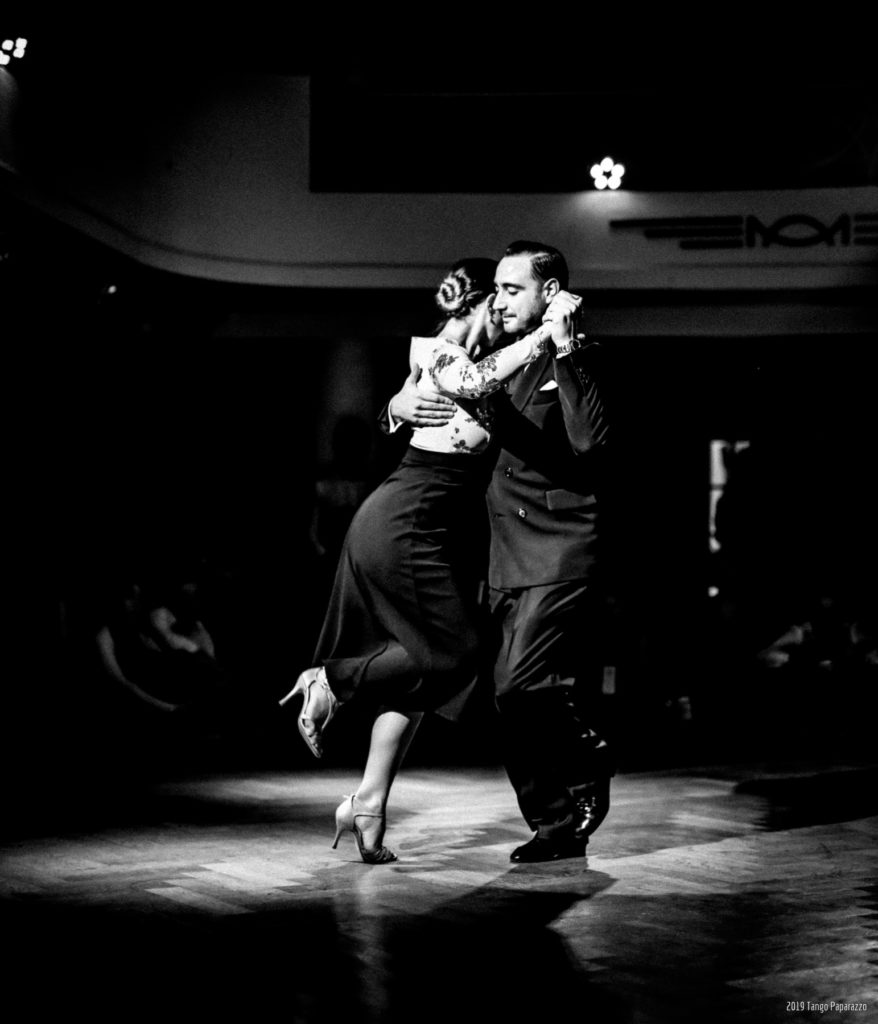
Five tips for taking tango pictures in low light
This post is old! – check out the more recent version: 10 tips to take better photos in low light!
A JPEG picture doesn’t care about no DPI
Every now and then I get a request to use pictures of mine for a poster, a flyer, a book. People usually find the pictures they want in my Flickr sets, where they are available in a max resolution of 1200 pixels for the longest side (so e.g. 1200 x 800 for photos in 3:2 aspect ratio). When this is not enough, people ask me for higher resolution versions. And that question comes in two versions:
Photography workflow with Picasa & Flickr
I’ve been thinking about writing this for a while, but I always thought everyone would probably work in the same way. But then I got introduced to iPhoto, which I consider a sh*tty piece of software, so apparently not everyone is as spoilt as us PC users. So here it goes: how do I process all the pictures I take, easily a thousand per month?
Step 1: the camera
As you might know, I’m a Canonista, I use a EOS 350D digital SLR. I’ve got two CompactFlash cards of 1GB, of which I use the second one only rarely. I don’t take my photos in RAW format, I use the highest JPEG resolution: 3456 x 2304 pixels or 8 megapixels. On a 1GB card I can get between 250 and 300 pictures.
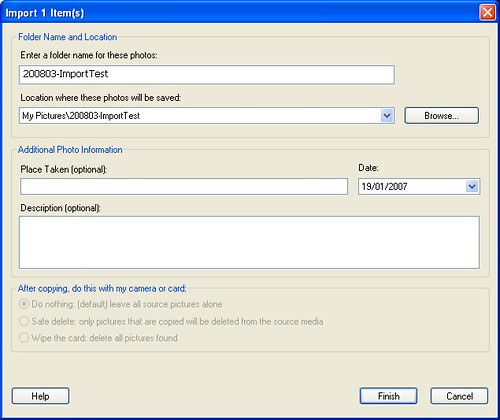
Step 2: import into Picasa
New lens for my Canon camera
My current favourite lens for my Canon 350D is the Canon EF 50mm F 1.8 II ø 52 mm. I really like the wide aperture (f/1.8) that allows me to take pictures without flash in dark environments like tango events, and the small depth-of-field that brings out the subject really nice. Plus, it was only 100€ when I bought it, and now it’s even at 84€.
What is HD-JPEG?
While reading the specs of the PackardBell Store & Play, I fall upon “Foto formaten: JPEG, HD JPEG” As I am working with several aspects of HD (High Definition) video all the time, I am of course intrigued. There is a standard for HD JPEG? Wow, tell me more!
HD JPEG = HD Photo = JPEG XR (my guess)
Well, it’s not that easy, actually. When you do a search for “HD JPEG” on Google, all you see is promo talk. Vendors like Philips and Panasonic use it as a feature on their devices, but there is no official definition of what it stands for. What I think happened is:
- Microsoft developed a standard “HD Photo” (formerly Windows Media Photo) that corrects some of the disadvantages of JPEG:
- It can store color information at 32 bit per color instead of 8 or 12. (In current JPEG, “24-bit colour” means: 3 x 8 bits for R, G and B.)
- All encoding steps of the algorithm are lossless (except for quantisation). So it has a true lossless mode (all coefficients = 1). JPEG does not have this (at least, not implemented).
- All kinds of tech mumbo-jumbo reasons (read the Wikipedia article)
- “HD Photo offers image quality comparable to JPEG-2000 with computational and memory performance more closely comparable to JPEG”
-
The JPEG committee announced that they would (consider to) adopt HD-Photo as a standard, with as a working name JPEG XR. Provided that, of course, …
One important aspect regarding the standardization of HD Photo is Microsoft’s commitment to make its patents that are required to implement the specification available without charge. Microsoft’s royalty free commitment will help the JPEG committee foster widespread adoption of the specification and help ensure that it can be implemented by the widest possible audience. The JPEG committee hopes and encourages all participants in its meetings to consider this royalty free approach when offering patented technology as a candidate for standardization.
-
The hardware vendors didn’t like the “JPEG XR” name (it doesn’t really show clearly that it’s an upgrade from JPEG), so they combined it with an acronym that consumers know and associate with “better” and “more expensive”, so was born “HD JPEG”.
- in short: Technically, it does not exist. Practically, it sells flat screens.

My first picture in the papers

An Baccaert wrote an article in De Morgen about Nathalie and Andrés, who are representing the Benelux in the ‘Mundial de Tango‘ in Buenos Aires. She wanted a nice picture to include with the article and came across one I made at the Tango Marathon in June.
“Living photographs” by Andrew Mole
I just discovered a really neat online publication: Cabinet Magazine. Here follows one of their articles, on Andrew Mole, a American photographer of the early 20th century. Kind of a Spencer Tunick, with a patriotic message and way more clothes (uniforms, actually).
