Idea: hosted classification service
Yesterday evening I was watching “How to replace yourself with very small shell script” by Hilary Mason.
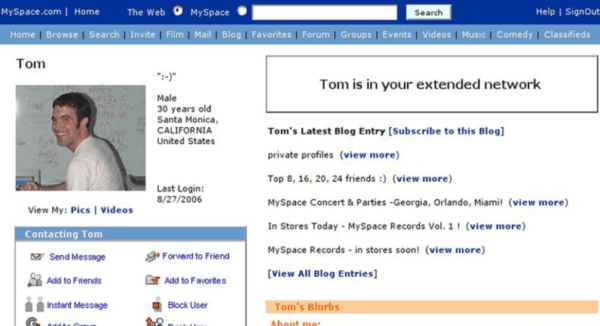
I’ve been experimenting with Twitter a couple of times, and one of the results, the FM Brussel Live playlist twitter bot, seems to be rather popular. I get a couple of subscriptions per day. But recently they’re almost all of the form [name of girl][number of 2 – 4 digits]. This is what they look like:


The Belgian Facebook community is growing and I was expecting to have a first ‘spam’ invitation eventually. It came a couple of days ago, from a group that goes by the name “In Loving Memory of Juliane Angel”. It seems to be created by a guy in rememberance of a girl that died some time ago (Juliane Angel). Even if this sad story is not a marketing ploy (which I don’t think it is), the invitations are still ‘unsollicited’. Whether they are ‘commercial’ is hard to say now, that might only become apparent when there are enough members (only two for the moment).
I just received the following email:
Attention Mr. Forret,
It has been brought to our attention that you published or caused to be published an e-mail communication and/or internet bulletin containing words that are false, misleading and defamatory to our firm. More specifically, these publications can be found at:
blog.forret.com/2004/12/domain-registry-of-america-scam/
More specifically your statement “Domain Registry of America scam”. That statement is false and misleading in many ways:
1) The title of the publication accuses Domain Registry of America as being involved or perpetrating some type of scam, which his false.
2) Domain Registry of America’s mailings do not “urge” or “scare” anyone to take any action towards the mailing. It informs domain name holders that they now have the option to “transfer and renew” their domain name with any Registrar of their choice and take advantage of lower pricing and better service.
3) Your use of the phrase “it’s a scam”
4) Unaware to you, this mailing has been approved by the Federal Trade Commission as clearly describing it meaning and purpose. (PF: Actually they’ve done quite the opposite)Your publication has caused and continues to cause Domain Registry of America irreparable damages and we intend to hold you responsible for these damages both past and present. You are hereby notified that we demand these false, misleading and defamatory statements mentioned above that you have published or have caused to be published be removed by no later than 15 days of your receipt of this notice.
If we do not receive written notification that these publications have been removed by the above deadline we will without further warning, advise our lawyers to commence a lawsuit in an Ontario court for damages and a permanent and interlocutory injunction restraining you, your employees, agents and representatives from making and publishing such publications. Domain Registry of America/Canada has successfully taken legal action in the past against other publishers of similar false, misleading and defamatory statements.
Govern yourselves accordingly,
Domain Registry of America/Canada
Relations Department
legal@droa.com
I just received an email on my Hotmail account from someone that normally never contacts me. The email itself is clearly generated by an automatic process:

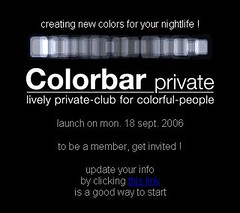 In the last three days I have received 3 mails from Colorbar, a “lively private club for colorful people”. The first one didn’t trigger my suspicion, since I am subscribed to some music-related mailing lists. The two next mails came for 2 @forret.com aliases of which I am certain they never subscribed to any list. So I took a closer look at the email. No contact details are given, no indication of where the email addresses came from, no possibility to unsubscribe, i.e. it’s a spam mail. To be even more specific: a belgian spam message.
Sometimes a spam mail escapes my filters and shows up in my inbox. Last week I got a “Enlarge your …” mail with some girl’s name in the From field. I deleted it right away but subconsciously I had already read some of the content. So I went back and retrieved it from my Deleted Items just to be sure: they really talk about “enlarge a penis up to 10 cm“? (UPDATE: I read this as 10cm TOTAL length, not 10 cm EXTRA length)
Indeed:

First off: as a straight guy I have no practical knowledge of what average size a girl has to put up with these days. Nor am I about to disclose my own dimensions (I want women to like me for my personality). Nevertheless, 10cm or 4″ strikes me as rather short, certainly as an ideal to be reached by taking pills. For those who cannot estimate dimensions: that’s the height of a cheap Nokia phone (the 1100, say).

I wrote about the economics of spam earlier:
P$ = [N * (I% * S% * W% * B% * M$)] – (N * E$) – (L% * C% * R$)
where
P$ = profit, bottom-lineN = number of emails sent (can be millions!)
I% = % of addresses that are valid/correct
S% = % of addresses that are not intercepted by anti-spam software
W% = % of emails to cause the receiver to go visit the website
B% = % of site visitors that actually buy the product
M$ = margin per product soldE$ = cost of sending 1 email
L% = risk of having legal action taken against you
C% = risk of getting convicted when you’re in court
R$ = average fine you would have to pay
What I often ask wonder about is the B%: people that actually buy the product. People actually order blue pills upon receiving emails like the one above? People believe they have been chosen to transfer millions of dollars out of some banana-republic?

I was reading about a technique to discourage spammers: let an organised mob fill in thousands of fake submissions so that there is no way telling how to distinguish them from real responses. They targeted a known spammer, Alex Polyakov, currently #8 in Spamhaus top 10 and he did feel the pain.

The great thing about Wiki’s is that everyone can edit them. The problem is that this attracts a new strain of spam morons: the wiki spammers. My Tango Wiki has gotten spammed several times per day since I launched it. A page gets changed to a list of URLs for various drugs, mostly ‘male performance related’, let’s say.
The Belgian Minister of Economy, Marc Verwilghen, recently announced the efforts the Belgian government would take to restore trust in the Internet as a way of doing business. This includes a directory of trustworthy online shops (e.g. in the travel business), but also some efforts to reduce spam. On the site spamsquad.be the following 4 basic rules are described to avoid spam: 1) don’t leave your email address, 2) don’t answer dubious emails, 3) camouflage your email address and 4) protect your computer.